

Women’s Health · Antalya
Clitoral Hood Reduction in Turkey (Antalya)
Excess skin folds of the clitoral hood can cause hygiene difficulties, friction against clothing or discomfort about appearance. I examine the tissue with you, discuss your expectations and the limits of the procedure openly, and plan your hoodoplasty individually.
- 13 years of experience
- Obstetrics & Gynecology Specialist
- English · Deutsch · Türkçe · Русский
A privacy-focused approach
Personal health data is protected in line with applicable legislation and professional confidentiality obligations.
The Basics
What is clitoral hood reduction (hoodoplasty)?
Hoodoplasty is a surgical procedure that reduces excess skin of the fold covering the clitoris (the clitoral hood or prepuce). The procedure involves the skin over the clitoris, not the clitoris itself. Preserving the nerve supply of the clitoris is the most important principle of planning.
01
Hood tissue
The size and folding of the clitoral hood differ from person to person and vary across a wide normal range.
02
Harmony with labiaplasty
If inner labia reduction is planned and there is also excess hood tissue, both procedures can be considered together for a proportionate result.
03
Different from clitoroplasty
An enlarged clitoris itself (clitoromegaly) is a different condition; it may require hormonal evaluation and a separate approach.
Doctor’s note
What to know before your appointment
These are the practical tips I give my patients most often. I explain your personal instructions at the consultation.
Timing your visit
An appointment on a day when you are not having your period makes the examination easier.
What to bring
Bring a list of your medications, especially blood thinners, and details of any previous operations.
On the day
Wear loose, comfortable clothing and cotton underwear. If sedation is planned, someone should accompany you home.
First weeks
Avoid tight underwear and trousers for a while. I explain hygiene and aftercare for the area in detail.
1–2
Weeks of noticeable swelling
Swelling and tenderness are common in the first two weeks after the procedure. It can take several months for the tissue to reach its final appearance.
Who Is It For?
When is clitoral hood reduction considered?
We decide on hoodoplasty together, based on your concerns, the examination findings and your expectations. These are the most common reasons my patients come to me:
- Noticeable excess or sagging skin of the clitoral hood
- Hygiene difficulties caused by excess skin folds
- Friction and discomfort with tight clothing, sports or cycling
- A disproportionate appearance after inner labia reduction
- Noticeable asymmetry of the hood tissue
- Persistent discomfort about appearance
Important: The appearance of the genital area varies greatly between people. The procedure should only be planned at the person’s own request and after they have been informed about its possible results and limitations.
Before the Procedure
Pre-procedure assessment
At the consultation my aim is to listen to your concerns and expectations, assess the clitoral hood together with the inner labia, and openly share the suitable method, possible results and limitations.
Assessed during the consultation
- The amount and structure of excess hood tissue
- Proportion with the inner labia and the need for a combined procedure
- The size and sensitivity of the clitoris
- Any previous genital surgery or procedure
- General health, medications and allergies
- Your expectations and the limits of the procedure
Situations that may require postponement
- Active vaginal, urinary tract or skin infection
- Pregnancy or possible pregnancy
- Uncontrolled bleeding or clotting disorder
- Conditions that affect healing, such as uncontrolled diabetes
- Genital warts or sores that require treatment
- Any doubt that the decision is being made of the person’s own free will
Step by Step
How does clitoral hood reduction work in Antalya?
I tailor the plan to each patient; the process usually follows these four steps.
1
Consultation
I listen to your concerns, expectations and medical history with full respect for your privacy.
2
Examination & consent
After the examination I explain the method, risks and limitations clearly and ask for your informed consent.
3
Hoodoplasty
I perform the procedure under the anesthesia plan we agreed on, usually with dissolvable stitches.
4
Follow-up
I explain your aftercare step by step, and we check your healing together at follow-up visits.
Surgical Technique
How is hoodoplasty performed?
I remove the excess skin of the clitoral hood in a planned way that does not leave the clitoris fully exposed and protects its nerves. I place the incisions in natural folds and close them with fine dissolvable stitches.
Vertical or lateral incisions
Depending on where the excess tissue is, the hood can be reduced with vertical or lateral incisions.
Nerve preservation
Only the superficial skin is treated so that the nerves responsible for clitoral sensation are preserved.
Combined with labiaplasty
When performed together with inner labia reduction, the transition between the two areas is planned to look proportionate.
Anesthesia
The procedure can usually be performed under local anesthesia or sedation; same-day discharge is generally possible.
Balanced planning: Removing too much hood tissue can leave the clitoris permanently exposed and cause uncomfortable sensitivity. A measured, protective approach is therefore essential.
After the Procedure
Recovery after hoodoplasty
Swelling, tenderness and mild bruising are common in the first days. Dissolvable stitches disappear on their own. It can take a few months for the tissue to reach its final appearance; early swelling may make the area look temporarily asymmetric.
What to keep in mind during recovery
- Take the medications I prescribe exactly as instructed.
- Clean the area gently as advised and keep it dry.
- Follow my advice on cold compresses in the first days.
- Wear loose, cotton underwear.
- Avoid intercourse, cycling and strenuous exercise for the recommended period.
- Attend your planned follow-up appointments.
Seek medical help without delay if you notice
- Heavy or increasing bleeding
- Rapidly growing, painful swelling or bruising
- Fever, chills or foul-smelling discharge
- Severe pain that does not ease with painkillers
- Noticeable opening of the stitch line
- Inability to pass urine
Be patient: Wait for healing to be complete before judging the final appearance.
Travelling for treatment? If you are coming to Antalya for this procedure, plan your stay so that the early follow-up visit can take place before you return home. Discuss the timing of your flight and your return to work with me during the pre-operative consultation.
Patient Safety
Possible risks and side effects
Hoodoplasty is a minor surgical procedure, but because it is performed in a sensitive area it carries some risks. I discuss your personal risks with you in detail beforehand.
Change in sensation
Temporary or, rarely, permanent increase or decrease in sensitivity may occur.
Over-resection
A permanently exposed clitoris may cause uncomfortable sensitivity due to friction.
Asymmetry
Tissues may heal differently and asymmetry may develop.
Bleeding and hematoma
Bleeding or a collection of blood may develop at the surgical site.
Infection and wound separation
Fever, increasing pain or opening of the stitch line should be assessed without delay.
Scarring
Rarely, a noticeable scar or hardness may develop.
Myths & Facts
Myths and facts about clitoral hood reduction
Below are the misconceptions I hear most often in my consultations, and what the medical evidence actually says.
Myth
“Hoodoplasty makes the clitoris smaller.”
Fact
Hoodoplasty involves the skin hood over the clitoris, not the clitoris itself. Reducing the clitoris is a different procedure.
Myth
“Hoodoplasty definitely increases sexual pleasure.”
Fact
Sexual pleasure depends on many physical and psychological factors. The effect on sexual life varies between people and cannot be guaranteed.
Myth
“The more hood tissue removed, the better.”
Fact
Removing too much tissue can leave the clitoris permanently exposed and cause uncomfortable sensitivity.
Myth
“There is one ‘normal’ look for every woman.”
Fact
The appearance of the genital area varies across a wide range, and most of these differences are normal.
Patients from abroad
Planning your treatment in Turkey
If you live outside Turkey, most of the planning can be done before you travel to Antalya.
01
Online pre-assessment
Send your questions and medical history via WhatsApp. I review them and tell you whether an examination in Antalya makes sense for you.
02
No interpreter needed
I speak English, German, Russian and Turkish, so you can discuss every step directly with your doctor.
03
Planning your stay
How many days you should stay depends on the procedure and your recovery. We agree on this together before you book your flights.
04
After you fly home
You can send us your questions via WhatsApp during your recovery at home.
Women’s Health
Related information pages
I cover related topics on the pages below.
Frequently Asked Questions
Frequently asked questions about clitoral hood reduction in Antalya
These are the questions my patients ask me most often. We clarify the answer for your own situation together after an examination.
Can hoodoplasty and labiaplasty be done together?
Yes. If inner labia reduction is planned and there is also excess hood tissue, both procedures can be planned in the same session for a proportionate result. I assess whether this is suitable for you during the examination.
Does clitoral hood reduction cause loss of sensation?
The procedure only involves the hood tissue and is planned to preserve the clitoral nerves. However, temporary or, rarely, permanent changes in sensation can occur, and I discuss this risk with you in detail beforehand.
Is hoodoplasty painful?
Local anesthesia or sedation is used so that you do not feel pain during the procedure. Soreness, tenderness and swelling may occur for a few days afterwards, and you can use the painkillers I recommend.
When can I have intercourse after hoodoplasty?
Avoiding intercourse for four to six weeks is generally recommended. We decide the exact period together at a follow-up visit, based on your healing.
Do the stitches need to be removed?
Dissolvable stitches are usually used, so they generally do not need to be removed.
Will there be a scar after clitoral hood reduction?
Because incisions are usually placed in natural folds, scars are often not noticeable. However, healing varies from person to person and scarring cannot be completely prevented.
When can I return to work?
Most people with desk jobs can return to work within a few days. It may take longer for physically demanding jobs; I will advise you according to your situation.

Medically reviewed by
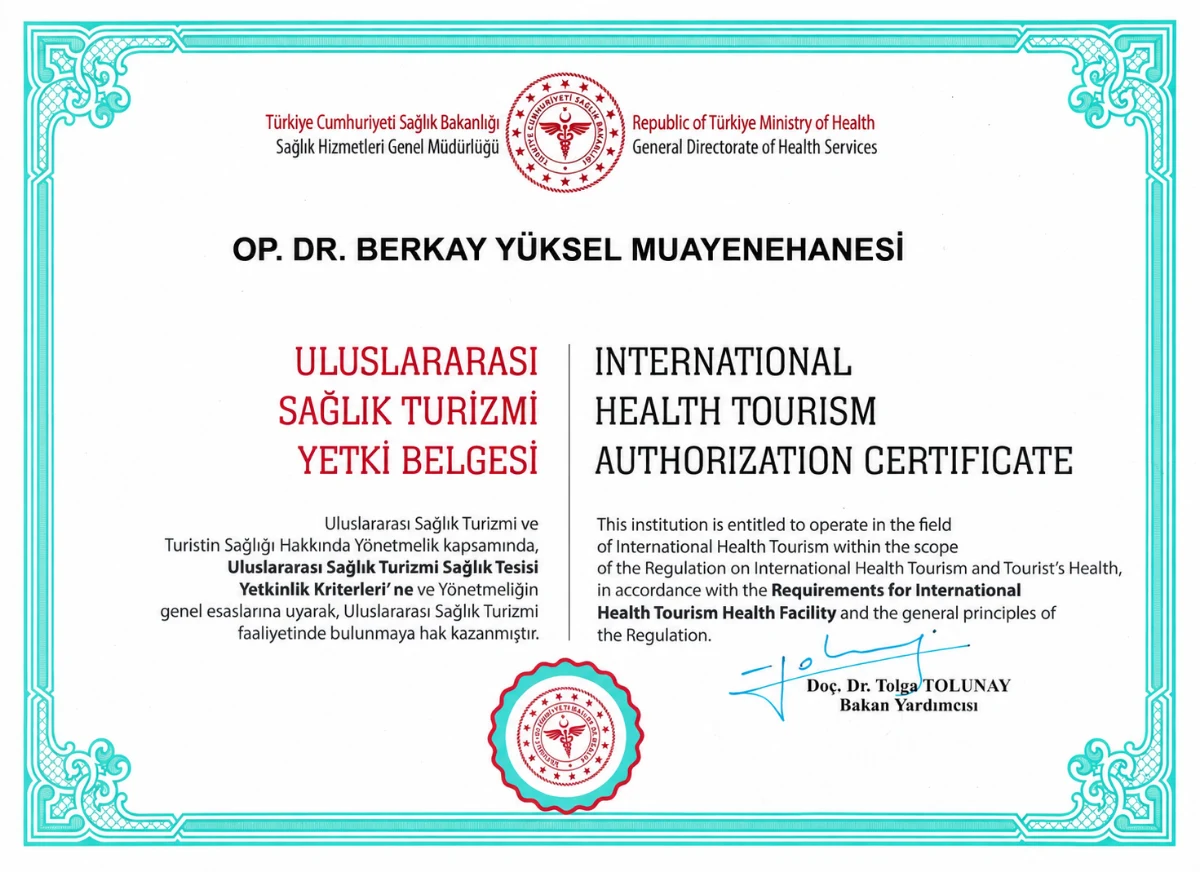
Op. Dr. Berkay Yüksel
Specialist in Obstetrics and Gynecology. Graduated from Afyon Kocatepe University Faculty of Medicine and completed specialist training at Antalya Training and Research Hospital. 13 years of experience; speaks English, German, Russian and Turkish. Last updated: 29 September 2026.
Op. Dr. Berkay Yüksel
Get in touch for a personal assessment
Whether the procedure suits you, which technique to use and when can only be decided together after an examination. Send me your questions on WhatsApp or call the clinic to book your appointment.
The content on this page is for general information only and does not replace a diagnosis, personal medical advice or an assessment of suitability for a procedure. Suitability, method and timing can only be determined by a physician after an examination; no outcome is guaranteed.
This content has been prepared solely for general health information purposes, in accordance with the Turkish Regulation on Promotion and Information Activities in Health Services published in Official Gazette No. 33075 on 12 November 2025. It is not a diagnosis or a treatment recommendation, and no outcome is guaranteed. It contains no prices, campaigns, discounts, patient reviews or before-and-after images. In an emergency, please contact the nearest healthcare facility.