

If you are comparing labiaplasty UK options with surgery in Turkey, the operation itself is largely the same. What differs is who registers the surgeon and licenses the clinic, how consent and reflection time work, how you travel, and who looks after you at home.
I am a gynecologist in Antalya and see patients from the UK. This guide does not argue for either country; it compares the two safety frameworks and turns UK advice into a practical plan.
Key points
- Techniques, risks and healing do not change with the country; the regulatory framework and the distance to your surgeon do.
- Check the GMC register and CQC registration in the UK, and Ministry of Health licensing and the health tourism certificate in Turkey.
- Keep at least two weeks to reflect, even if your first consultation is online.
- Plan a check-up before you fly, bring your records home and agree in writing who handles a complication.
Labiaplasty in the UK or abroad: what stays the same
Labiaplasty reduces the inner lips (labia minora). A trim removes tissue along the outer edge; a wedge removes a section from the middle and joins the edges. A clitoral hood reduction is sometimes added when the fold above the clitoris is also prominent.
Some women have physical discomfort, such as rubbing in clothing or during exercise; others are concerned mainly about appearance. Labiaplasty is a short day-case operation of about 45 minutes with no overnight stay. According to the NHS, the risks include bleeding, infection, scarring, reduced sensitivity and the small blood-clot risk of any operation.
Why quotes differ between clinics
Labiaplasty is rarely available on the NHS, so most UK women look at private labiaplasty. If you are comparing labiaplasty cost in the UK with treatment abroad, compare what each written plan covers rather than a single number:
- the type of anesthesia and the length of surgery
- whether a combined procedure, such as a hood reduction, is planned
- operating room and hospital standards
- how many follow-up visits are included, and where
- for international patients: transfers, interpreter support, extra nights or a return visit
Normal variation or a reason for surgery? Setting realistic expectations
ACOG notes that the size, shape and color of the external genitalia vary considerably between women, and the NHS describes noticeable skin folds as completely normal. Looking different from images online is not, on its own, a medical problem.
In genital aesthetics, my first step is not choosing a procedure; it is understanding the patient. Before asking “How would you like to look?”, I usually ask “What actually bothers you?”, because that is what really shapes the plan.
ACOG advises assessing for body dysmorphic disorder where indicated, and referring for psychological evaluation before surgery is considered.
Who regulates surgeons and clinics in each country
Both countries register doctors and license facilities, through different bodies.
| United Kingdom | Turkey | |
|---|---|---|
| Doctor registration | General Medical Council (GMC) register, which also shows specialist registration | Doctors and specialist qualifications are registered with the Ministry of Health |
| Facility licensing | In England, the Care Quality Commission (CQC) registers services offering surgical cosmetic procedures; Scotland, Wales and Northern Ireland have their own regulators | Private practices and hospitals are licensed by the Ministry of Health |
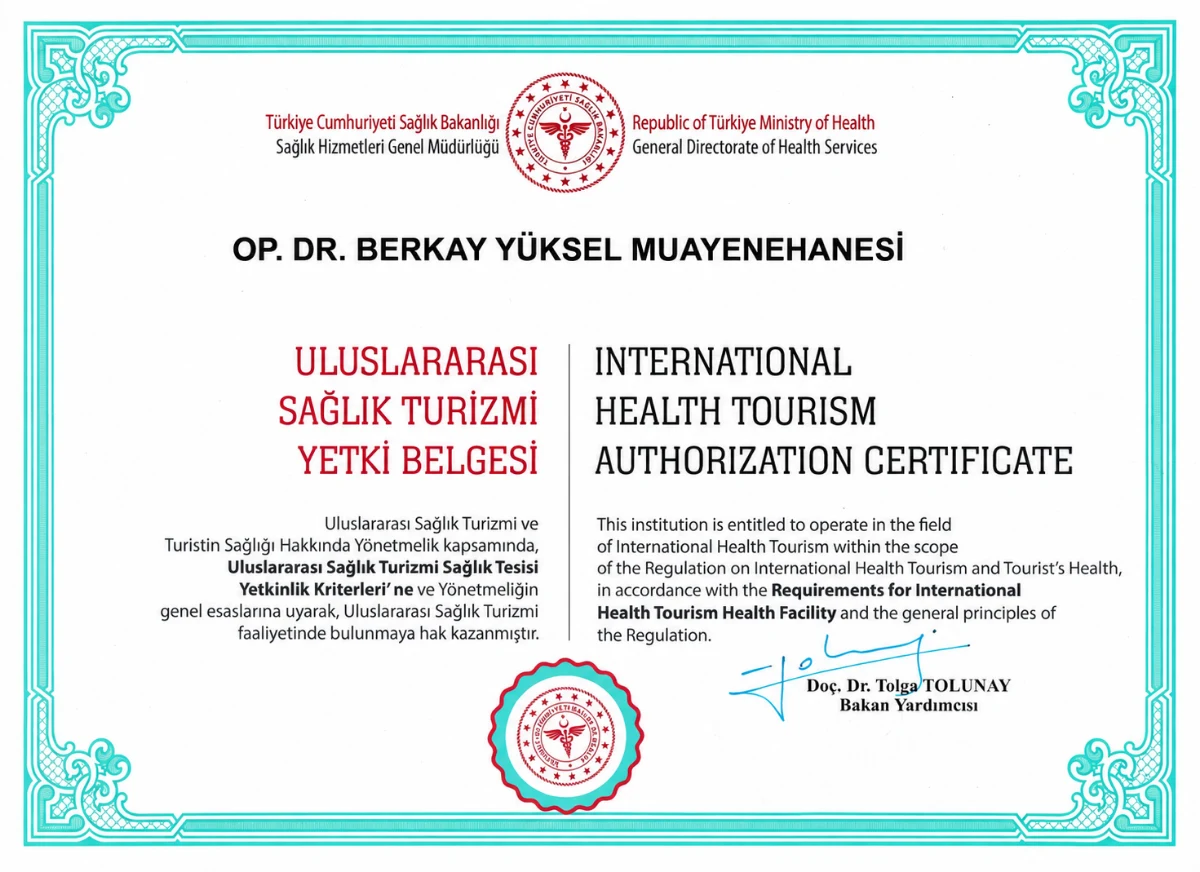
| International patients | No separate certificate | Facilities treating health tourists need the Ministry of Health’s International Health Tourism Authorization Certificate |
| Insurance | Ask what indemnity cover the surgeon and clinic hold | The 2025 regulation requires complication insurance for operating room surgery on international patients |
| Complaint route | The provider first; then the CQC about care, or the GMC about a doctor | The facility first, which must evaluate complaints; then the Ministry of Health |
I hold the International Health Tourism Authorization Certificate, and you are entitled to ask any clinic, including mine, to show its certificate and license details.
Side-by-side checklist: what to verify before you book
NHS advice is to find out how surgeons and clinics are regulated in your chosen country and how standards are enforced. Wherever you have surgery, verify:
- Surgeon and facility: the registrations in the table above, checked yourself.
- Who you speak to: the operating surgeon, not only a coordinator, in a language you understand.
- Anesthesia: which type is planned and who gives it.
- Insurance: what the clinic’s cover includes; the NHS notes travel insurance does not normally cover problems from surgery.
- Follow-up and revision: where check-ups happen and what happens if you need further treatment.
The NHS warns against surgery sold as part of a holiday and against paying for a hospital you have never seen or a surgeon you have not met. Time-limited offers are a reason to slow down.
Consultation, consent and a cooling-off period
The Royal College of Surgeons’ standards say patients should be offered a cooling-off period of at least two weeks before consenting, with written consent taken by the operating surgeon. The CQC gives the same two-week advice, and the NHS recommends two consultations with the treating surgeon. An online first consultation can keep that structure:
- Online consultation: a video call with the surgeon about your concerns, history and options.
- Written plan: the proposed procedure, risks, alternatives and aftercare.
- Reflection time: at least two weeks before you commit to dates.
- Examination: in person before surgery, so the plan is confirmed or changed.
- Signed consent: only after the examination, with the option not to go ahead.
An online call cannot replace an examination: whether labiaplasty suits you, and which technique, can only be decided after I have examined you. Surgery is not a decision to rush.
What a travel plan should include
A written plan should leave time on both sides of the operation. The page on labiaplasty in Antalya explains how the procedure itself is organized with me.
- time for the examination and final consultation before surgery day
- a check-up before your flight home, built into the dates
- accommodation close to the clinic, ideally with a companion
- written wound care instructions, warning signs and contact details
- how you would get home in an emergency
The NHS advises rest rather than a holiday after surgery: no alcohol, sun exposure, sightseeing or going in the water.
Recovery timeline: flying, sitting, swimming and summer heat
Recovery depends on the extent of surgery, tissue, general health and healing capacity. Another patient’s experience is not your recovery timetable; after surgery you receive personal advice and follow-up checks.
| Stage | What to expect |
|---|---|
| Day of surgery | Day case; you leave the same day |
| Next day | Most patients return to daily life, with rest and loose clothing |
| Before flying | A check-up; the flight date is agreed individually |
| First two weeks | The NHS says you may need up to two weeks off work |
| About a month | Sex, cycling and strenuous sport need about a month of healing; the NHS advises no physical activity for four to six weeks |
| A couple of months | The skin may take this long to heal fully, according to the NHS |
Flying: the NHS points out that air travel and surgery both increase blood-clot risk. It sets no specific waiting period for labiaplasty, so I agree your flight date after the check-up, considering your own risk factors.
Sitting, swimming and heat: sitting can feel tender at first, and a soft cushion helps; avoid the sea, pools and baths until a check-up confirms the wounds have closed. In an Antalya summer, sweat increases friction, so stay in the shade, wear breathable cotton and keep the area clean and dry.
Aftercare from a distance and handling a complication back home
The NHS notes that UK surgeons are responsible for follow-up of complications, while overseas clinics may not offer the same or have a professional in the UK. Plan continuity of care before you travel, and bring home:
- the operation note, including the technique and type of stitches
- a discharge summary in English and a list of the medicines prescribed
- your follow-up plan and the surgeon’s contact details
The Turkish health tourism regulation requires facilities to give international patients their requested medical records free of charge. Share them with your GP, and agree in writing who assesses a problem remotely and who manages a complication or revision, including whether you would travel back.
Seek urgent care in the UK for heavy bleeding, rapidly increasing pain or swelling, fever, foul-smelling discharge, a wound that opens, pain or swelling in one calf, chest pain or breathlessness. Inform your surgeon afterwards.
Who should not travel for genital surgery
For some women, surgery close to home is safer; for some, no surgery is the right answer. Travel is not advisable with:
- a history of blood clots or a known clotting disorder
- smoking you cannot stop around the time of surgery
- diabetes that is not well controlled
- too little time off to rest, attend a check-up and fly home safely
- expectations surgery cannot meet, or significant body-image distress
Sometimes a woman believes she has a serious anatomical problem, and at the examination we see it is a completely normal variation. In those cases, not recommending surgery is part of being a doctor. You can request a remote pre-assessment; a final decision still requires an examination.
Frequently asked questions
Can my GP or practice nurse check my wounds in the UK?
You can ask your GP practice whether they are able to look at the wounds after you return; your operation note makes this much easier. Ask before you travel. Routine follow-up still belongs to your operating surgeon, so keep them informed about anything your GP or nurse notices.
Should someone travel with me?
It is sensible. After a day-case operation you should not be alone on the first night, and a companion can help with transfers, meals and the journey home. If you travel alone, make sure the clinic knows and that you can reach help at any hour during your stay.
Can a clitoral hood reduction be done on the same trip?
If the examination shows the hood is also prominent, it can be planned as part of the same operation. This changes the length of surgery and sometimes the recovery advice, so it belongs in your written plan before you travel, not added on the day without time to reflect.
Which languages can the consultation be held in?
I speak English, German, Russian and Turkish, so the consultation, consent discussion and aftercare instructions can be held directly in English without an interpreter. Wherever you go, make sure the surgeon personally explains the risks and alternatives, and that you understand everything before you sign.
Summary
Labiaplasty follows the same principles in the UK and Turkey. The differences lie in registration, consent and reflection time, and how aftercare continues at home. Check registrations, keep two weeks to reflect, plan a check-up before you fly and bring your records home.
Sources
- NHS. Labiaplasty (vulval surgery). 2023. nhs.uk
- NHS. Cosmetic surgery abroad. 2022. nhs.uk
- Care Quality Commission. Choosing cosmetic surgery. cqc.org.uk
- Royal College of Surgeons of England. RCS calls for new law to protect patients undergoing cosmetic surgery, as it publishes professional standards. 2016. rcseng.ac.uk
- Republic of Türkiye Ministry of Health. Uluslararası Sağlık Turizmi ve Turistin Sağlığı Hakkında Yönetmelik (Regulation on International Health Tourism and Tourist Health). Official Gazette No. 32882, 2025. resmigazete.gov.tr
- American College of Obstetricians and Gynecologists. Elective Female Genital Cosmetic Surgery. Committee Opinion No. 795. 2020. acog.org